
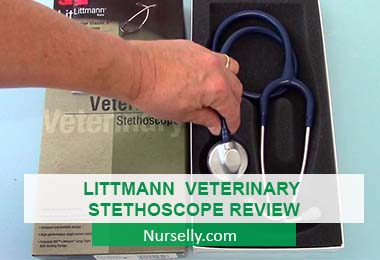
2026 Updated Review
Our honest Littmann Classic III review covers sound quality, comfort, durability, pros, cons, and how it compares to the Cardiology IV. Find out if it’s the right stethoscope for you.
Best Overall for General Nursing
Students, Med-Surg, Telemetry, Clinic
Beginner to Intermediate
$120 – $180
Reliable acoustics, outstanding comfort, excellent durability.
- The Littmann Classic III remains the gold standard for nursing students and general bedside nurses in 2026.
- Its tunable diaphragm technology allows you to switch between high and low-frequency sounds simply by adjusting pressure, saving critical time during rapid assessments.
- While it excels in Med-Surg, Telemetry, and Clinic settings, ICU or ER nurses requiring advanced cardiac auscultation should consider upgrading to the Cardiology IV.
- At 147 grams, it offers exceptional 12-hour shift comfort without causing ear fatigue or neck strain.
- Quick Verdict & Ratings
- Pros and Cons
- What Is the Littmann Classic III?
- The Tunable Diaphragm Explained
- Deep-Dive Feature Analysis
- Clinical Environment Breakdown
- Head-to-Head: Classic III vs. Cardiology IV
- Budget Alternatives: ADC & MDF
- Durability, Maintenance & Warranty
- Who Should Buy the Classic III?
- Frequently Asked Questions
- Real-World Nursing Use Cases
- Final Verdict
You’ve probably seen the Littmann Classic III recommended everywhere — nursing school orientation lists, Reddit threads, Facebook groups for new grads. And there’s a reason for that. But “everyone recommends it” isn’t good enough when you’re about to spend $120–$180 on a stethoscope you’ll carry every shift for the next several years.
So let’s actually dig into this thing.
We put the Classic III through its paces in busy Med-Surg and ER environments — the kind of clinical chaos where patients are calling out, monitors are alarming, and your phone is buzzing with lab notifications. The question wasn’t just “does it work?” It was: does it work well enough for the nursing environments you’ll actually be in?
The short answer? For most nurses and nursing students, yes — it’s still one of the best all-around stethoscopes you can buy in 2026. But it has real limitations you should know about before you commit.
Here’s the full, honest breakdown.
Quick Verdict
| Category | Rating |
|---|---|
| Acoustic Performance | 8.5/10 |
| Comfort During Long Shifts | 9/10 |
| Durability | 9/10 |
| Value for Money | 8/10 |
| Ease of Use | 9.5/10 |
| Overall | 8.8/10 |
Best For: Nursing students, new grad nurses, Med-Surg, Telemetry, Home Health, Clinic, and Pediatric nurses
Not Ideal For: Cardiologists, advanced cardiac specialists, or ICU nurses who regularly assess faint murmurs or S3/S4 gallops in noisy environments
Bottom Line: The Littmann Classic III delivers reliable acoustic performance, outstanding comfort, and excellent build quality in one package that holds up over years of clinical use. It’s not the most powerful stethoscope 3M makes — the Cardiology IV is — but for the majority of nurses, the Classic III does everything it needs to do, and does it well. If you want a stethoscope you can trust through nursing school and your first several years of bedside practice, this is still the one to beat.
Pros and Cons
- Excellent acoustic sensitivity for routine nursing assessments
- Lightweight and comfortable for 12-hour shifts
- Dual-head chestpiece covers both adult and pediatric patients
- Tunable diaphragm technology — switch frequencies without flipping the chestpiece
- Durable tubing that resists body oils, alcohol, and everyday abuse
- Wide variety of colors and custom engraving options
- Backed by 3M’s reputation and a solid warranty
- Widely recognized and trusted by clinical instructors and nursing programs
- Noticeably less sensitive than cardiology-grade models for advanced cardiac assessment
- Premium price point compared to budget alternatives
- Tubing can stiffen in very cold environments
- Not the best option if you’re regularly assessing faint S3/S4 heart sounds or subtle lung crackles over ventilator noise
What Is the Littmann Classic III?
The Littmann Classic III is 3M’s flagship general-purpose stethoscope, positioned in their lineup as the standard for nurses, medical students, and healthcare professionals who need reliable acoustic performance without the advanced specifications of their cardiology line.
Key Specifications
| Specification | Detail |
|---|---|
| Manufacturer | 3M Littmann |
| Weight | 147 g (5.2 oz) |
| Chestpiece | Dual-head (adult + pediatric) |
| Technology | Tunable diaphragm |
| Tube Length | 69 cm (27 inches) |
| Available Colors | 20+ colors and finishes |
| Warranty | 3 years |
What’s in the Box
- The Classic III stethoscope
- One pair of snap-tight soft-sealing eartips (pre-installed)
- One pair of Snap Tight Soft-Sealing extra eartips
- User guide
- Warranty registration card
The box is clean and professional — the kind of thing that doesn’t look out of place as a graduation gift.
The Tunable Diaphragm: What It Actually Means for Nurses
This is the feature that sets the Classic III apart from older-generation or budget stethoscopes, and it’s worth understanding before you get to the bedside.
A traditional stethoscope diaphragm picks up only one frequency range. To switch between high-frequency sounds (like normal breath sounds or S1/S2 heart sounds) and low-frequency sounds (like bowel sounds or S3/S4 gallops), you’d flip the chestpiece to the bell side.
With tunable diaphragm technology, you control what you hear by adjusting the pressure you apply:
- Light pressure → picks up low-frequency sounds (bowel sounds, S3/S4 gallops)
- Firm pressure → picks up high-frequency sounds (breath sounds, S1/S2 heart sounds, murmurs)
In practice, this means you can do a full cardiac and respiratory assessment without taking the chestpiece off the patient’s chest. On a busy Med-Surg floor where you’re assessing eight patients a shift, that efficiency adds up.
Deep-Dive Feature Analysis
Acoustic Performance
Let’s be direct: the Classic III is not the most acoustically sensitive stethoscope on the market. The Littmann Cardiology IV is noticeably better for detecting subtle sounds, and if cardiac auscultation is your specialty, you’ll feel the difference.
That said, for the assessments most bedside nurses perform every shift — checking breath sounds, confirming bowel sounds after surgery, assessing S1 and S2 heart sounds, listening for obvious murmurs or wheezes — the Classic III performs very well.
In a standard hospital room, the Classic III picks up:
- Breath sounds: Clearly — normal vesicular sounds, crackles, wheezes, and rhonchi come through with good clarity
- Heart sounds: S1 and S2 reliably; S3 and S4 are audible but require more concentration, especially in a noisy environment
- Bowel sounds: Easily — this is one area where even budget stethoscopes do fine
- Carotid bruits and abnormal vascular sounds: Detectable with practice and proper technique
The acoustic performance becomes more impressive when you consider how much ambient noise nurses deal with. The Classic III’s sound isolation is genuinely good — the eartip seal (more on that below) does a solid job of blocking hallway noise, distant monitor alarms, and general ward chaos.
The Dual-Sided Chestpiece
The adult side features a large tunable diaphragm — the one you’ll use 95% of the time. The pediatric side is smaller, making it appropriate for infants, children, and small adults. The pediatric diaphragm is also tunable, so you get the same frequency-control functionality on both sides.
For nurses who work with both adult and pediatric patients — postpartum nurses, PICU step-down nurses, pediatric floor nurses — this versatility is genuinely useful and eliminates the need to carry a separate pediatric stethoscope.
12-Hour Shift Comfort
This is where the Classic III quietly earns a lot of its five-star reviews.
At 147 grams, it’s light enough that you won’t feel it hanging around your neck after hour six of a busy night shift. The binaurals (the metal tubes on the earpiece) are angled forward, which positions the eartips to follow your ear canals naturally rather than fighting against them.
The Snap Tight Soft-Sealing eartips are noticeably comfortable compared to the firmer eartips found on budget models. They seal well without the painful pressure that makes you pull your stethoscope out of your ears between every patient assessment.
The eartip angle matters. If your stethoscope never sounded quite right with a previous model, the problem was often a poor eartip seal rather than acoustics. The Classic III’s forward-angled binaurals solve this for most people, but if you have unusual ear canal anatomy, the extra eartips in the box let you experiment before deciding the stethoscope isn’t performing.
Durability and Build Quality
The Classic III is built to handle clinical life. The tubing is made from a latex-free PVC compound that resists the oils from your skin and the isopropyl alcohol wipes you’ll use to clean it between patients. It doesn’t crack or dry out the way cheaper tubing does.
Over time, the chestpiece develops a natural patina — the chrome or stainless steel finish gets minor scuffs — but this is cosmetic and doesn’t affect performance. Nurses who’ve used the same Classic III for five or more years regularly report that it still sounds as good as it did when new, provided they’ve maintained it.
Maintenance reality check: The single most common reason a good stethoscope starts sounding muffled is earwax buildup in the eartip openings. A quick cleaning every few weeks keeps performance exactly where it should be.
Clinical Environment Breakdown: Where It Thrives (and Where It Struggles)
Nursing School and Med-Surg: The Sweet Spot
This is where the Classic III is almost perfect.
In nursing school clinicals, you’re learning to assess breath sounds, bowel sounds, and basic cardiac tones. The Classic III’s clarity makes it much easier to learn what normal sounds should sound like before you start identifying abnormal ones. Clinical instructors recommend it so consistently because it gives students a reliable acoustic baseline — you hear what you should hear, without the hypersensitivity of cardiology-grade models that can make a normal heart sound confusing to a beginner.
On a busy Med-Surg floor, you’re doing rapid patient assessments, admissions, and discharges. The tunable diaphragm means you spend less time fumbling with the chestpiece and more time focusing on your patient. The comfort during back-to-back assessments matters too — nobody wants to be wrestling with their stethoscope during a 12-patient Med-Surg load.
For Telemetry nurses, the Classic III handles the cardiac monitoring follow-up well. You’re verifying heart rate, listening for S1/S2, checking for obvious new murmurs or rhythm irregularities. The Classic III is more than capable here.
Emergency Department: Capable with Caveats
The ER is loud — there’s no getting around it. Curtain-bay ERs with six patients visible from the nurses’ station, overhead PA announcements, family members in crisis, and multiple monitor alarms running simultaneously are genuinely challenging acoustic environments.
The Classic III holds up reasonably well in moderate ER noise. The eartip seal does a good job of filtering ambient sound, and for the rapid assessments most ER nurses perform — lung sounds, bowel sounds, confirming blood pressure by auscultation — it’s reliable.
The caveat: in extremely noisy trauma bay environments, the Classic III will occasionally make you work harder for what you need to hear. You may need to ask a family member to step back, or position yourself more precisely. This isn’t a dealbreaker, but it’s honest.
For new ER nurses, the Classic III is still a strong choice. For experienced ER nurses dealing with high-acuity cardiac or respiratory patients routinely, the Littmann Cardiology IV is worth the investment.
ICU and Critical Care: Know the Limitations
Here’s where we need to be direct with you.
An ICU nurse can use the Classic III — and many do. But for the kind of detailed cardiac auscultation the ICU demands, the Classic III has real limitations.
Specifically:
- Faint murmurs in a noisy ICU (ventilators, IV pumps, continuous monitor alarms) are harder to detect and grade reliably with the Classic III
- S3 and S4 heart sounds — which can indicate heart failure and are clinically significant in your ICU patients — require much more concentration to hear, and in a loud environment, you may miss them
- Fine late-inspiratory crackles in a ventilated patient are at the edge of what the Classic III can reliably detect
This isn’t a failing — the Classic III was never designed to be a cardiology stethoscope. But if you’re an ICU nurse who regularly needs to assess subtle murmurs, S3/S4 gallops, or discriminate between fine and coarse crackles over ventilator noise, this is where the Littmann Cardiology IV earns its significantly higher price tag.
For ICU nurses who are primarily doing medication administration, titrating drips, and performing general assessments — and relying on echo, 12-lead, and telemetry monitoring for your detailed cardiac work — the Classic III remains a functional choice.
Head-to-Head: Littmann Classic III vs. Cardiology IV
This is the comparison most nurses want answered, so let’s be thorough.
Side-by-Side Comparison
| Feature | Littmann Classic III | Littmann Cardiology IV |
|---|---|---|
| Acoustic Sensitivity | Very Good | Exceptional |
| Weight | 147 g | 203 g |
| Chestpiece | Dual-head (adult + pediatric) | Single large + convertible small |
| Tunable Diaphragm | Yes (both sides) | Yes (both sides) |
| S3/S4 Detection | Moderate | Excellent |
| Performance in Noisy Environments | Good | Excellent |
| Price Range | $120–$180 | $250–$350 |
| Ideal For | Students, Med-Surg, Telemetry, Clinic | ICU, ER, Cardiology, ACNP, MD |
| Warranty | 3 years | 3 years |
Is the Acoustic Upgrade Worth the Extra $100?
For most nurses — honestly, no.
The Cardiology IV’s acoustic superiority is real and meaningful for specific clinical work: detecting faint aortic stenosis murmurs, reliably hearing S3 gallops in a CHF exacerbation, or auscultating over ventilator noise in the MICU. If that’s your daily clinical reality, the extra hundred dollars is worth every cent.
But for nursing students learning their first respiratory assessments? For Med-Surg nurses confirming bowel sounds returned post-op? For Telemetry nurses checking heart sounds before administering digoxin? For clinic nurses doing annual physicals? The Classic III does the job well, and the $100–$150 difference is better spent elsewhere.
The acoustic gap between the Classic III and the Cardiology IV only becomes consistently noticeable in the following situations:
- Advanced cardiac assessment (detecting and grading murmurs, identifying S3/S4)
- High-ambient-noise environments (busy ICU, trauma bay)
- Patients who are very obese or heavily muscular, where sound transmission is compromised
If you’re a nursing student or a nurse in a general inpatient or outpatient setting, the Classic III is the smarter buy.
The Budget Alternative: Classic III vs. ADC Adscope 603 and MDF Acoustica
This question matters a lot for nursing students who are eyeing the $25–$50 models on Amazon and wondering if the Classic III is worth three to four times the price.
Classic III vs. ADC Adscope 603
The ADC Adscope 603 is probably the best-known legitimate budget stethoscope in nursing school. It typically runs $35–$55, it’s durable, and it’s a real clinical instrument — not a toy.
| Feature | Littmann Classic III | ADC Adscope 603 |
|---|---|---|
| Acoustic Quality | Very Good | Adequate |
| Tunable Diaphragm | Yes | No (traditional bell/diaphragm) |
| Build Quality | Excellent | Good |
| Comfort | Excellent | Adequate |
| Typical Price | $120–$180 | $35–$55 |
| Longevity | 5–10+ years | 2–5 years |
The honest truth: you can learn nursing school with the Adscope 603. You’ll hear the sounds you need to hear. But the experience is noticeably different. The Classic III’s tunable diaphragm is more intuitive for beginners, the eartip comfort is substantially better over a full clinical day, and the acoustics in borderline situations (detecting faint lung sounds in a heavy patient, for example) are meaningfully better.
If your budget is genuinely limited and you need something for first-semester clinicals while you’re still figuring out if nursing is for you — the Adscope 603 works. But if you’re committed to nursing and you can afford the Classic III, you’ll use it for years and won’t regret the investment.
Classic III vs. MDF Acoustica
The MDF Acoustica SE is another mid-range option (around $40–$60) that gets recommended in budget-conscious nursing school forums. It’s a dual-head stethoscope with decent acoustic performance and a lifetime warranty.
The MDF Acoustica is a good stethoscope for the price. But comparing it to the Classic III is like comparing a reliable economy car to a well-built midsize sedan. Both get you where you’re going. One is just substantially more comfortable and capable over the long haul.
For nursing students who plan to use their stethoscope throughout school and into their nursing career: buy the Classic III once. The math works out.
How Long Does the Littmann Classic III Last?
With normal clinical use and reasonable care, a Littmann Classic III lasts 5–10 years easily. Many nurses report using the same scope for over a decade.
Maintenance Tips
- Wipe down the chestpiece and tubing with isopropyl alcohol after patient contact
- Clean earwax out of eartip openings monthly (a damp cotton swab works)
- Store loosely coiled or hanging — avoid folding the tubing tightly at the same spot repeatedly
- Replace eartips when they start cracking or losing their seal (3M sells replacements inexpensively)
- Submerge the stethoscope in liquid
- Run the tubing through a sterilization autoclave
- Leave it in a hot car — heat degrades the tubing faster than almost anything else
- Leave it coiled tightly in a bag for extended periods
Warranty
3M backs the Classic III with a 3-year warranty against defects in materials and workmanship. In practice, the stethoscope rarely needs warranty service — it’s built to hold up.
Who Should Buy the Littmann Classic III?
This Is the Right Stethoscope If You Are:
- A nursing student who wants a reliable instrument that will carry you from first-semester clinicals through graduation and beyond
- A new graduate nurse entering Med-Surg, Telemetry, Postpartum, Pediatrics, or Clinic
- A working nurse in a general inpatient or outpatient setting who performs routine patient assessments
- A home health nurse who needs versatility across diverse patient populations
- A nurse who wants one stethoscope that does the job across multiple specialties without overpaying for cardiology-level specs you won’t regularly use
- A nursing educator or preceptor looking for a model to recommend to students
Consider Upgrading to the Cardiology IV If You Are:
- An ICU or critical care nurse who regularly performs advanced cardiac auscultation
- An ER nurse working in a high-acuity trauma environment and frequently needing to distinguish subtle cardiac and respiratory findings
- An NP, CRNA, or PA whose practice depends on detailed auscultatory findings
- A nurse who finds yourself consistently struggling to hear adequately with the Classic III in your specific clinical environment
Common Questions About the Littmann Classic III
For most nurses and nursing students, yes. The Classic III occupies a practical middle ground — substantially better acoustic performance than budget models, at significantly less cost than cardiology-grade stethoscopes. Over a nursing career, the price difference between the Classic III and a cheap option is trivial. Buy quality once.
Absolutely — in fact, it’s one of the most commonly recommended stethoscopes specifically for nursing students. Clinical instructors frequently recommend it because its acoustic clarity makes it easier to learn normal versus abnormal sounds during your first clinical rotations.
It can detect many murmurs, particularly louder ones. For grading subtle murmurs (Grade I or II) or assessing nuanced cardiac pathology, the Cardiology IV is the stronger tool. But for the cardiac assessments most nurses perform — identifying new or changed murmurs, flagging findings for physician follow-up — the Classic III is clinically appropriate.
The Cardiology IV offers noticeably better acoustic sensitivity, particularly for low-frequency sounds and in noisy environments. The Classic III closes most of that gap for general nursing practice while costing $100–$150 less. See the full comparison section above for specifics.
You can — many ICU nurses do. But it has real limitations in high-acuity cardiac assessment over ICU ambient noise (see the ICU section above for the honest breakdown). If you’re a new nurse heading to the ICU, starting with a Classic III is reasonable; as your skills and clinical needs develop, you may find yourself wanting the Cardiology IV.
The Classic III is adequate for many nurses with mild-to-moderate hearing difficulties, particularly because of its good eartip seal and solid acoustic sensitivity. However, nurses with significant hearing loss may benefit from an amplified electronic stethoscope like the Littmann CORE Digital Stethoscope or the Eko CORE 500. Standard acoustic models — even good ones like the Classic III — have a ceiling on amplification that electronics don’t.
The Classic II SE was the previous generation model. The Classic III improved on it in several ways: better acoustic performance, improved tunable diaphragm sensitivity on both the adult and pediatric sides, and updated eartip design. If you’re comparing the two on a secondhand market, go for the Classic III — the acoustic improvement is noticeable.
Real-World Nursing Use Cases
Final Verdict: Should You Buy the Littmann Classic III?
- You’re a nursing student who wants a stethoscope that will serve you through school and your first years of practice
- You work in Med-Surg, Telemetry, OB, Pediatrics, Clinic, or Home Health
- You want reliable acoustic performance without paying cardiology-level prices
- Comfort over a 12-hour shift matters to you (it should)
- You want a stethoscope backed by a trusted brand with a proven track record
- You’re in critical care and regularly perform advanced cardiac auscultation → look at the Littmann Cardiology IV
- Your budget is genuinely constrained and you need something for first-semester only → the ADC Adscope 603 is a reasonable placeholder
- You have significant hearing loss → look at amplified digital options like the Eko CORE 500
- You need something specifically optimized for ER or high-acuity environments → see our Best Stethoscope for ER Nurses guide
Bottom Line
After putting the Littmann Classic III through busy clinical environments in 2026, the conclusion is the same as it’s been for years: for the vast majority of nurses, this is still the stethoscope to buy.
It’s not the flashiest option. It’s not the most powerful. But it’s reliable, comfortable, durable, acoustically capable for general nursing practice, and backed by a brand that has been making clinical instruments for over 50 years. It will sound good on day one and still sound good five years from now if you take care of it.
For nursing students who are debating whether to spend the money: buy it once, buy it right. The Classic III doesn’t need to be replaced when you graduate — it makes the transition with you.
For working nurses evaluating an upgrade from a budget model: the difference in acoustic quality and day-to-day comfort is real and immediate. You’ll notice it the first time you use it.
Ready to check current pricing? The Classic III is available directly through 3M’s authorized channels and major medical supply retailers. Prices shift, so it’s worth checking what’s currently available — you’ll occasionally find it within a few dollars of the budget alternatives that don’t come close to matching it.
Join thousands of nurses who trust the gold standard in clinical auscultation. Fast shipping and genuine 3M warranty included.
Related Articles:
- Best Stethoscope for Nurses — Complete 2026 Guide
- Littmann Classic III vs. Cardiology IV — Is the Upgrade Worth It?
- Best Stethoscope for Nursing Students
- Best Stethoscope for ER Nurses
- Littmann Cardiology IV Review
- Best Stethoscope for Hard of Hearing Nurses
- How to Choose a Stethoscope for Nursing School